
Philemon
Written by Paul, the book of Philemon is uniquely personal. In this letter, Paul is addressing a friend on behalf of a runaway slave. Paul refers to himself as a “slave of Christ” as he urges Philemon to “do what you ought to do.” In a single chapter, Paul paints a picture of a radically different social order, and he undermines the entire system of slavery in only a few short words. Furthermore, Paul depicts a sort of heavenly family dynamic that is devoid of hierarchy or class—instead it is fully submitted to the will of God.
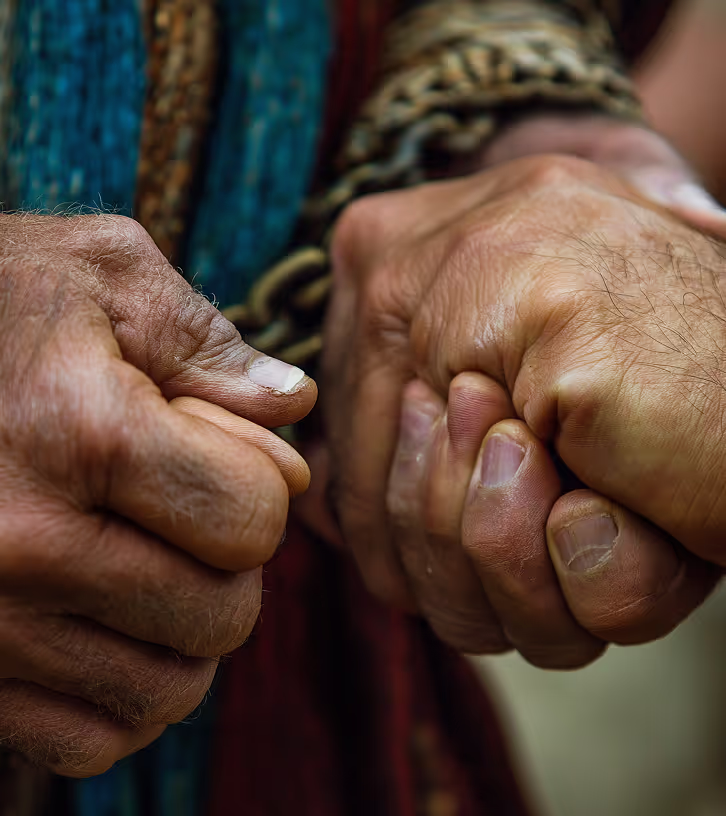
Slavery in Ancient Rome
/ slav·ery / noun
In ancient Rome, enslaved people were in the city, the countryside, households and businesses, and ownership wasn't limited to elites. Either captives of war or traded an sold, slaves comprised approximately 10-20% of the Roman Empire.
Helot
/ hel·ot / noun
A state-owned serf of the ancient Spartans.
Roman Citizenship
/ Ro·man cit·i·zen·ship / noun
Either a right of birth or purchased at a hgh cost, Roman citizenship afforded certain rights and protections valuable in the ancient world.
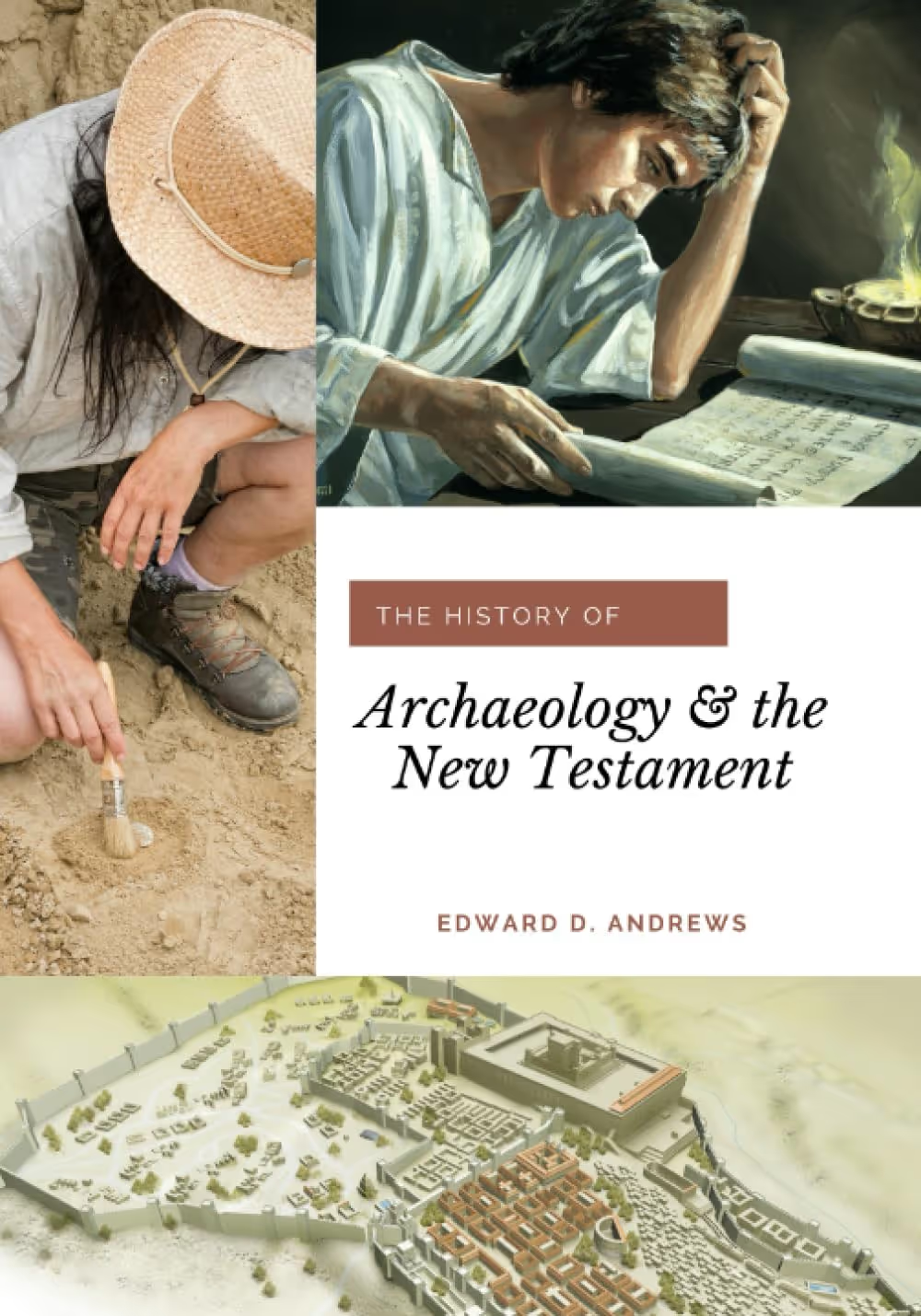
Archeology and the New Testament
Richard Bauckham

A Handbook of New Testament Exegesis
Craig L Blomberg
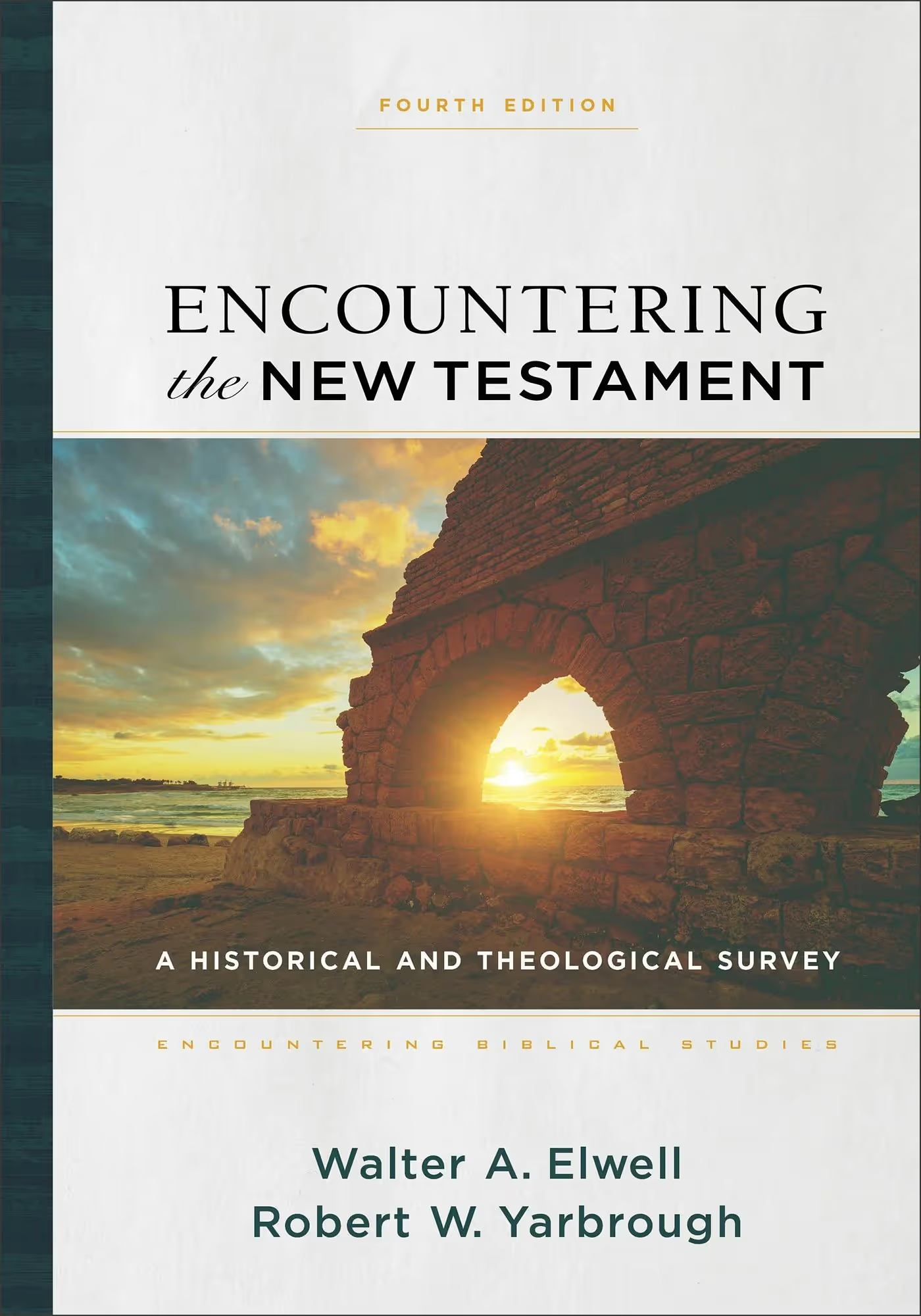
Encountering the New Testament; a Historical and Theological Survey
Walter Elwell
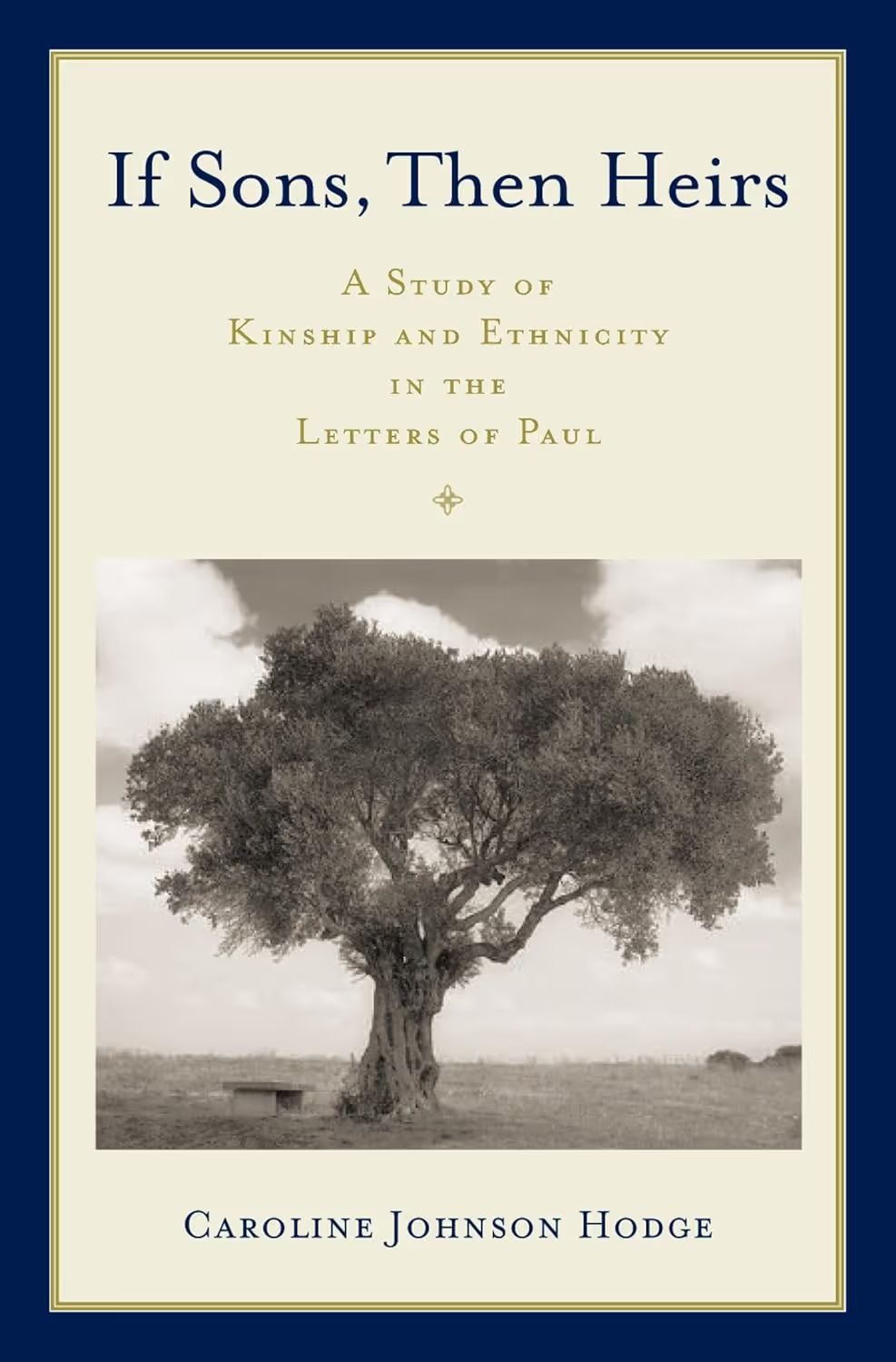
If Sons, Then Heirs: A Study of Kinship and Ethnicity in the Letters of Paul
Caroline E. Johnson Hodge