
Joshua
The book of Joshua picks up where Deuteronomy ends: Moses is dead, and leadership has passed to Joshua, Moses' protégé and military commander. Now, a new generation must move from promise to possession…This is a story wrapped in violence, covenant, and hope — it is a book that wrestles with identity, obedience, and the cost of inheritance. At once triumphant and sobering, Joshua is a theological history, not a modern war chronicle. It reads like both a victory hymn and a warning. Deuteronomy wrestles with complex questions and the wartime narratives are a source of much debate and questioning, especially in modern times. Themes covered include inheritance, warring conquest, and inclusivity—none of which can truly be answered on a surface level.
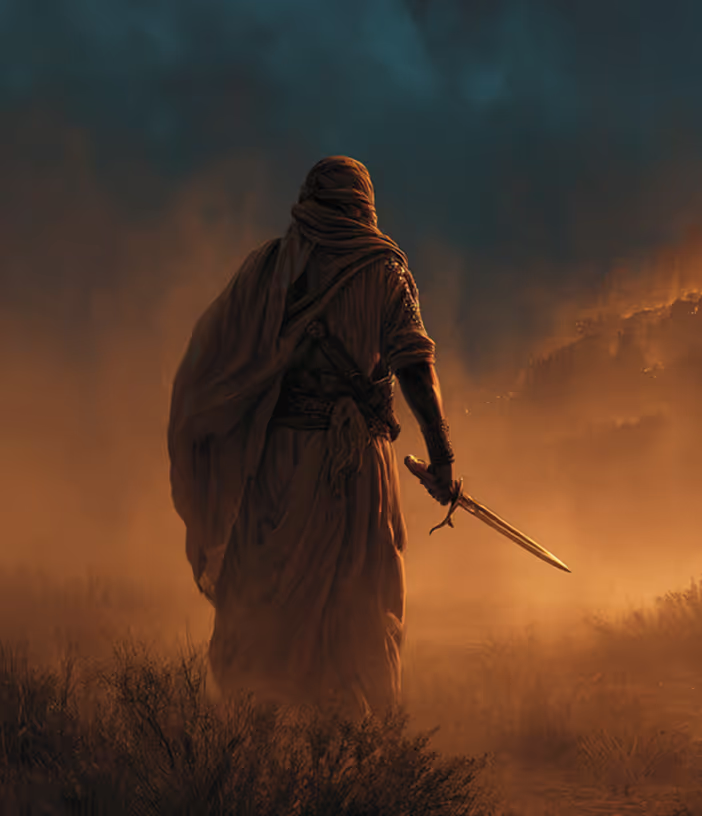
Hazor
/ ha'-zor / proper noun
The royal city of Jabin taken by Joshua. Before the Israelite conquest, it seems to have been the seat of a wide authority. It remains tthe only city in that region that Joshua destroyed by fire.
Amarna Letters
/ Amar·na / adjective
A group of several hundred clay tablets inscribed with cuneiform (“wedge-shaped”) writing that date to the fourteenth century B.C. and were found at the site of Tell el-Amarna, the short-lived capital of ancient Egypt during the reign of Amenhotep IV / Akhenaten (ca. 1353–1336 B.C.)
Bronze Age
noun
The third phase in the development of material culture among the ancient peoples of Europe, Asia, and the Middle East, following the Paleolithic and Neolithic periods (Old Stone Age and New Stone Age, respectively). The term also denotes the first period in which metal was used.
Handbook of the Historical Books
Victor P Hamilton
Bible History, Old Testament
Alfred Edersheim
Zondervan Handbook of Biblical Archeology
Randall Price