
John
With an emphasis on what scholars refer to as “High Christology,” John’s gospel differs from the three Synoptic Gospels in its attention to Jesus as God. This is not to suggest that John’s account contradicts Matthew, Mark, and Luke, but rather that whereas the Synoptics illustrate Jesus’ humanity, John showcases his divinity. In this way, the four gospels give us a fuller understanding of a god who became flesh in order to redeem his creation. John follows Jesus’ life closely, but he highlights seven key miracles in particular, revealing Jesus as divine. John also makes a point of delving deeper into the theological profundity of Christianity—providing reflection for religious leaders (both Christian and Jewish) who were facing tremendous pressure at the time.

Logos
/ log'-os / noun
Greek term literally meaning "word" or "logical principle."
Christology
/ Chris·tol·o·gy / noun
Of or pertaining to the dual identity of Christ as both God and man.
Messiah
/ mes·si·ah / noun
Transliteration of a Hebrew word meaning "anointed one," the equivalent of the Greek word Christ. Originally applied to anyone specially designated for a particular role, such as king or priest.
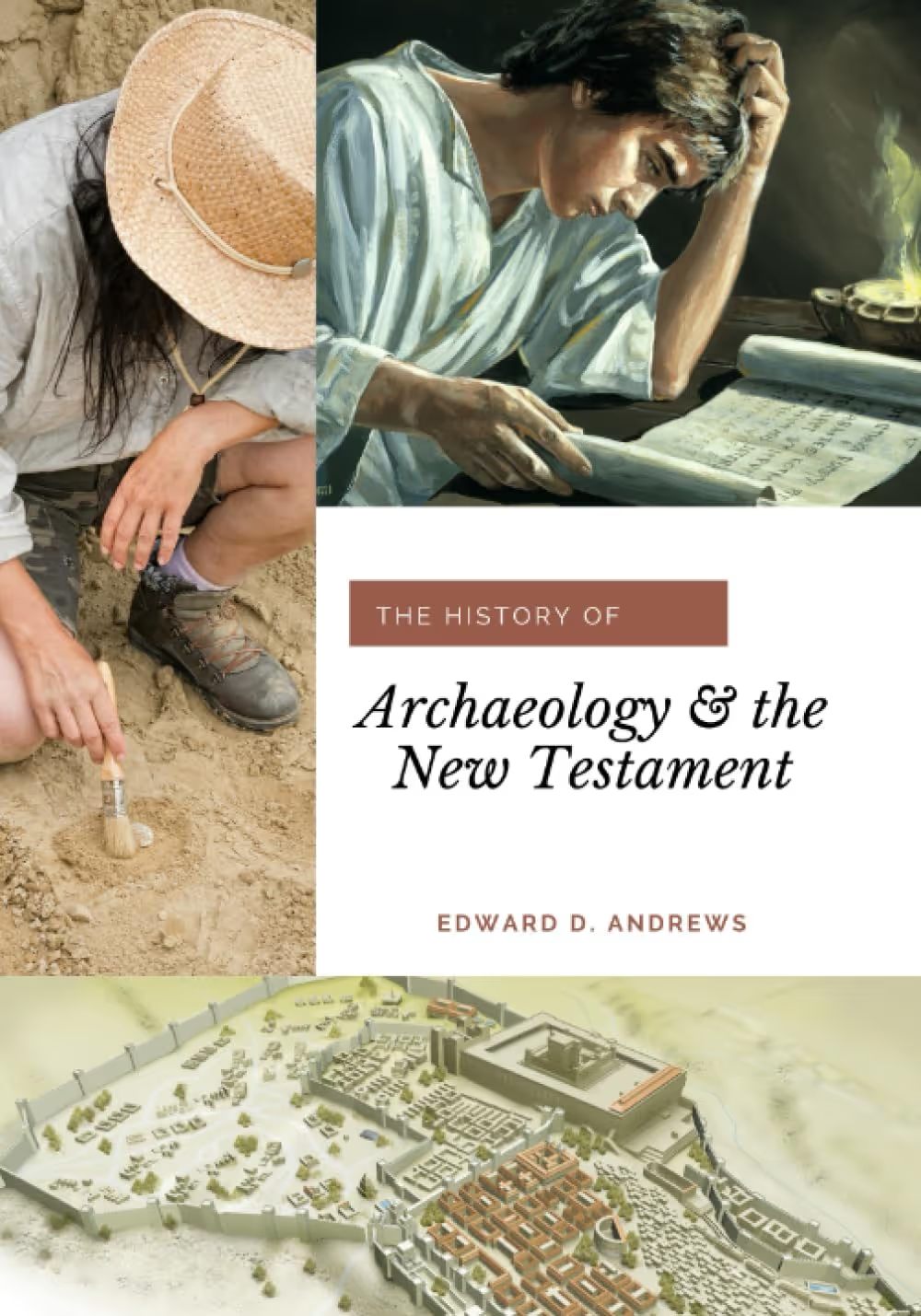
Archeology and the New Testament
Richard Bauckham

A Handbook of New Testament Exegesis
Craig L Blomberg
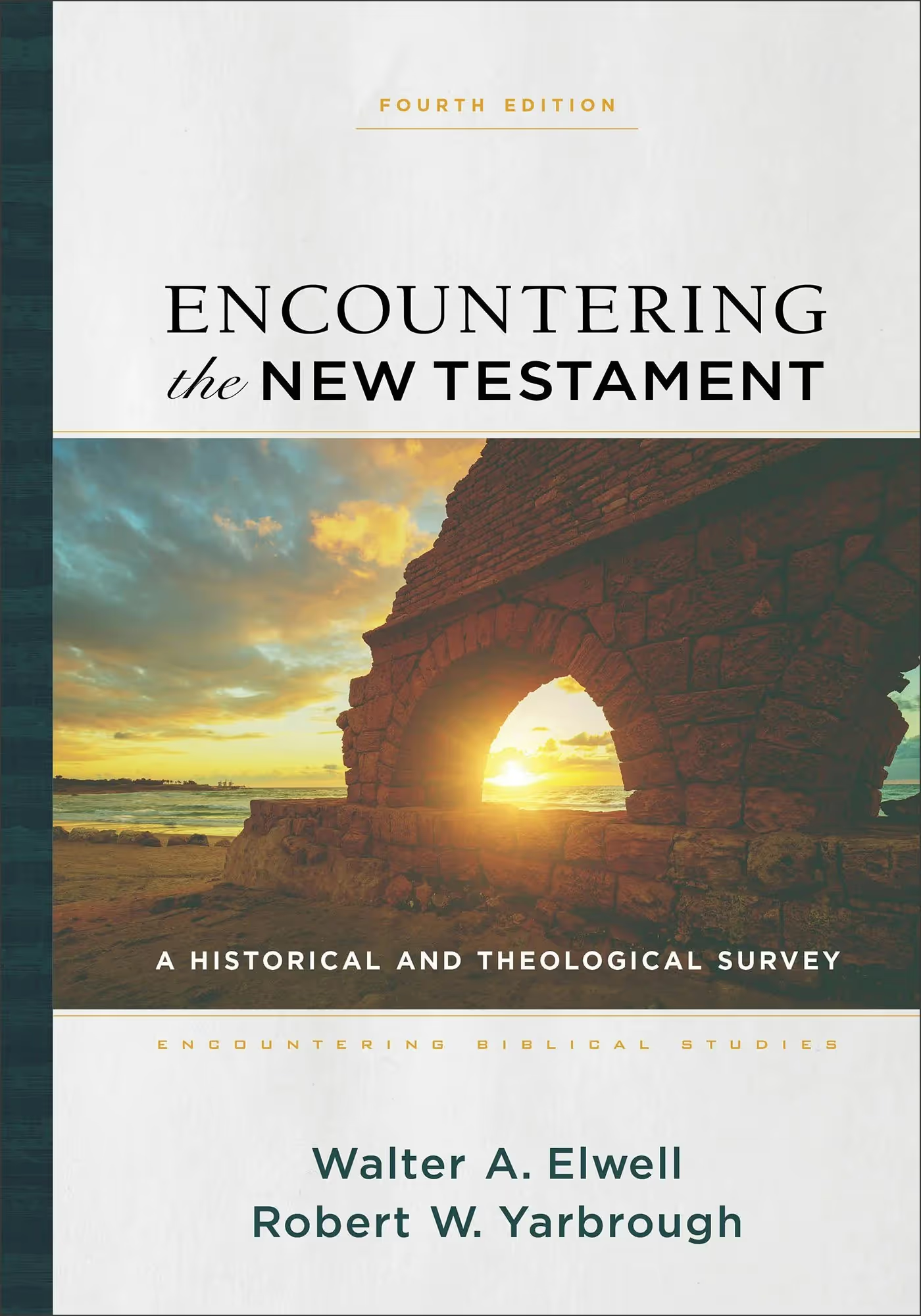
Encountering the New Testament; a Historical and Theological Survey
Walter Elwell