
Ezra
Ezra is a raw and deeply human account of a community wrestling with how to start over after failure. Written from a place of post-exile, Ezra details how the Israelites renew their covenantal faithfulness in a world where God’s people are a small, vulnerable minority under imperial power. It wrestles with questions about holiness in a pluralist, secular society. Ultimately the book of Ezra raises questions that we are still asking to this very day.
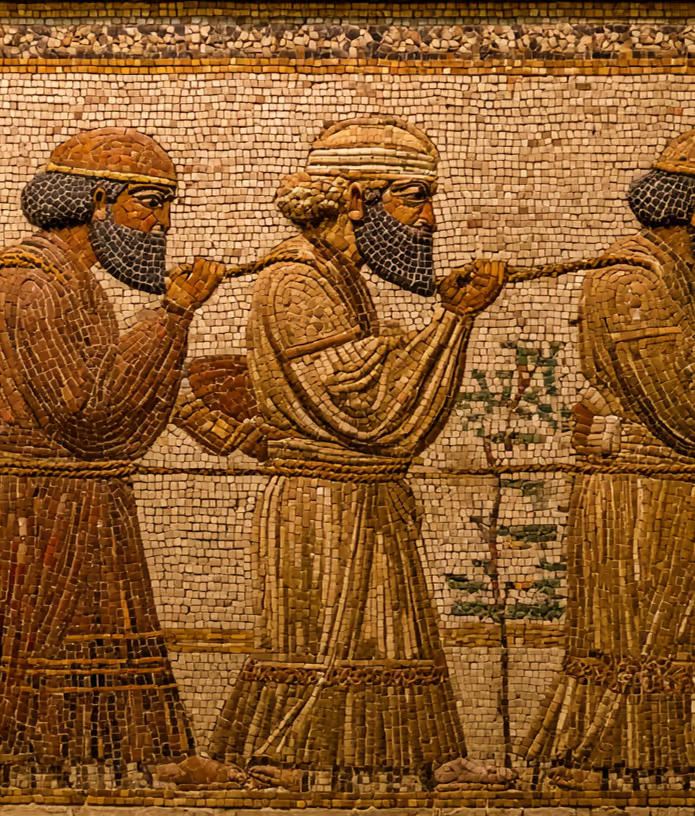
Sovereign
/ sov·er·eign / adjective
One possessing or held to possess supreme political power.
Sumerian
/ Su·me·ri·an / noun
The people of southern Mesopotamia whose civilization flourished between c. 4100-1750 B.C.
Aramaic
/ Ar·a·ma·ic / noun
A Semitic language known since the ninth century B.C. as the speech of the Aramaeans and later used extensively in southwest Asia as a commercial and governmental language and adopted as their customary speech by various non-Aramaean peoples including the Jews after the Babylonian exile
Bible History, Old Testament
Alfred Edersheim
Holman Bible Atlas: a Complete Guide to the Expansive Geography of Biblical History
Thomas V. Brisco
Zondervan Handbook of Biblical Archeology
Randall Price