
Ephesians
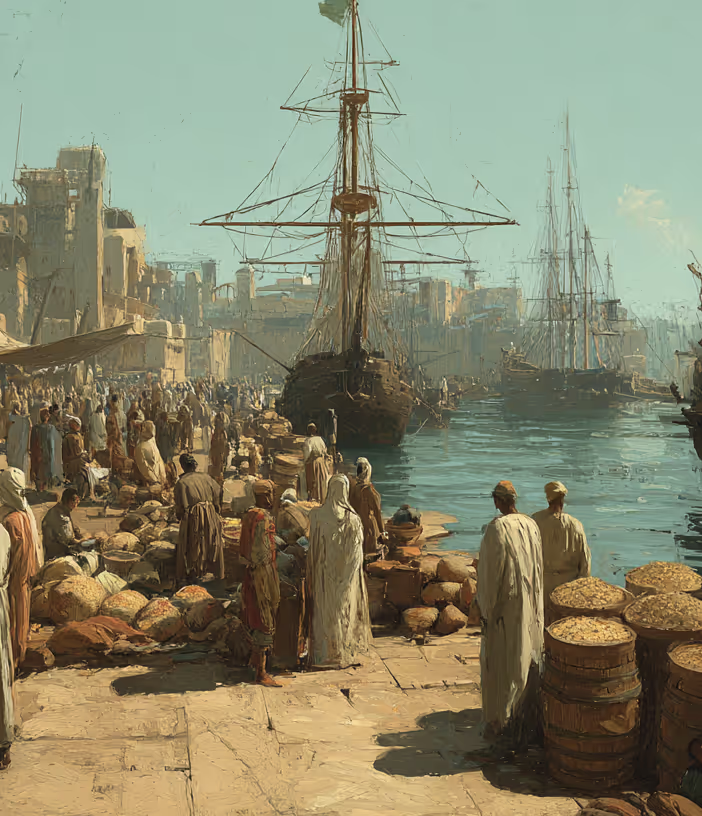
Written to the church at Ephesus, the letter itself is far broader in content than any of Paul’s other correspondences. This is likely due to the position of Ephesus as a major trade route—strategically positioned and accessible to people from all over the known world. Rather than addressing specific controversies or crises, Ephesians offers an eloquent vision of God’s eternal plan in Christ, emphasizing unity, spiritual identity, and ethical living in light of the gospel.
Artemis
/ Ar·te·mis / noun
Greek goddess of wild animals, the hunt, and vegetation and of chastity and childbirth; she was identified by the Romans with Diana.
Diana
/ Di·ana / noun
Goddess of childbirth, the fertility goddess, the goddess of the moon as well as the patron goddess of wild beasts in Roman mythology.
Court of the Gentiles
/ gen·tile / noun
The outermost courtyard of the Second Temple in Jerusalem, specific area accessible to non-Jews who were legally forbiddento enter the inner courts of the temple.
Dionysus
/ Di·o·ny·sus / noun
Greco-Roman nature god of fruitfulness and vegetation, especially known as a god of wine and ecstasy.
Archeology and the New Testament
Richard Bauckham

A Handbook of New Testament Exegesis
Craig L Blomberg
Encountering the New Testament; a Historical and Theological Survey
Walter Elwell