
Ecclesiastes
Many believe the book of Ecclesiastes to be written in response to the ancient Epic of Gilgamesh where the mythological hero famously concludes that “life is meaningless.” This question is carefully examined by the author of Ecclesiastes and not easily dismissed. Questions like, “why does evil seem to win?” or “why do bad things happen to good people?” pervade the author’s discourse. Existential questions abound, and there is a grappling with the problem of evil that is perhaps more direct than any other book in the Bible. Ultimately, however, the author concludes that life is meaningless—but only when separated from God’s plan. It’s only when we align ourselves with His purposes that life becomes more than any one individual existence.
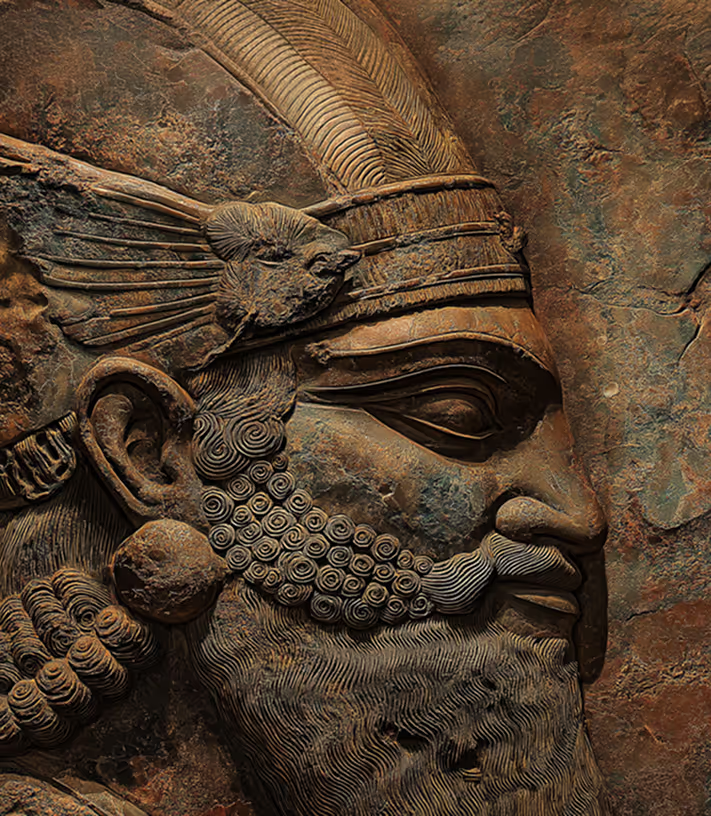
Epic of Gilgamesh
/ Gil·ga·mesh / proper noun
A legendary Sumerian king and hero of the Gilgamesh Epic.
Harper's Songs
Music
Lyrics composed in ancient Egypt to be sung at funeral feasts and inscribed on monuments.
Bible History, Old Testament
Alfred Edersheim

Archeological Study Bible
Walter C Kaiser et. al
An Introduction to Biblical Hermeneutics; the Search for Meaning
Walter C Kaiser Junior and Moises Silva
Handbook on the Wisdom Books and Psalms
Daniel J. Estes