
Colossians
Authorship of Colossians has been hotly debated. Ironic for a book that deals largely with the false teachings that arose in Colosse. In Colosse, believers were being influenced by teachings that mixed Christian faith with elements of Jewish legalism, Greek philosophy, mysticism, and ascetic practices. Paul (possibly Timothy or other apostle) writes for the purpose of clarification. In this letter, Paul adamantly defends the supremacy of Christ and the finished work on the cross.
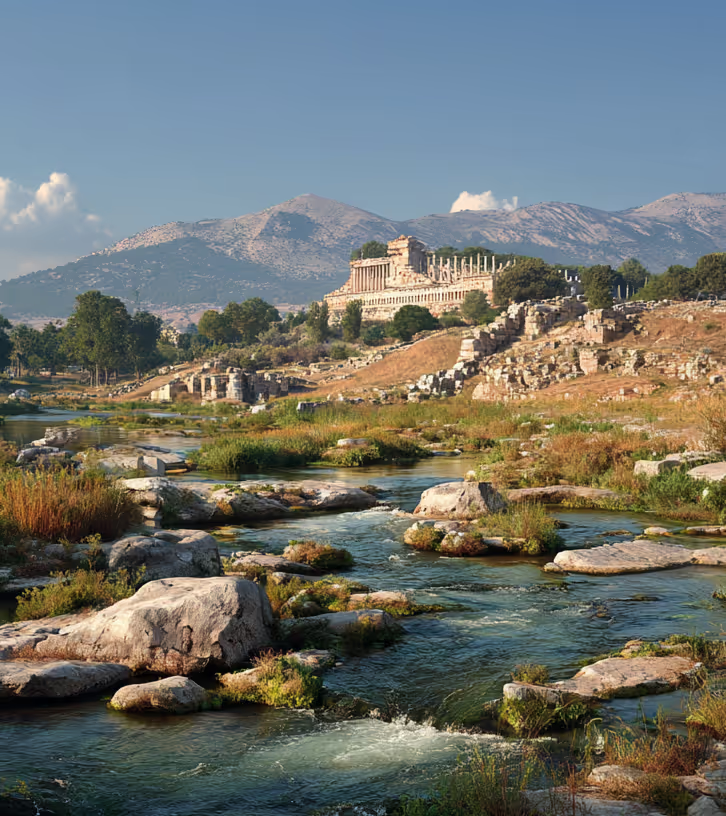
The Skeptics
/ skep·tic / noun
Literally, a “skeptic” is an inquirer. As long as knowledge has not been attained, the skeptics aim not to affirm anything. This gives rise to their most controversial ambition: a life without belief.
Heresy
/ her·e·sy / noun
Any teaching incompatible with Christian orthodoxy.
Colossae
/ Co·los·sae / geographical location
The ancient city of southwest central Asia Minor in southwestern Phrygia.
Stoicism
/ sto·i·cism / noun
Particularly fashionable in the Roman period, Stoic philosophy was conceived of as comprising three parts: physics (phusikê), logic (logikê), and ethics (êthikê). All three parts of philosophy were thought by the Stoics to work together to form an interconnected and coherent system.
Archeology and the New Testament
Richard Bauckham

A Handbook of New Testament Exegesis
Craig L Blomberg
Encountering the New Testament; a Historical and Theological Survey
Walter Elwell