
1-2-3 John
The three Johannine Epistles (1 John, 2 John, and 3 John) are traditionally attributed to John the Apostle, the “beloved disciple,” who also authored the Gospel of John. These letters reflect the theology and style of the Fourth Gospel and are deeply concerned with truth, love, obedience, and fellowship with God through Jesus Christ.While 1 John reads more like a theological sermon or pastoral tract, 2 and 3 John are brief, personal letters written to specific individuals or communities. Together, they address issues of false teaching, Christian identity, love, and church relationships in the late 1st century.

Gnosticism
/ Gnos·ti·cism / noun
Various related philosophical and religious movements prominent in the Greco-Roman world in the early Christian era.
The Incarnation
/ in·car·na·tion / noun
The central Christian doctrine that God became flesh, that God assumed a human nature and became a man in the form of Jesus Christ, the Son of God and the second person of the Trinity.
Doxology
/ dox·ol·o·gy / noun
An expression of praise to God often included at the end of New Testament letters.
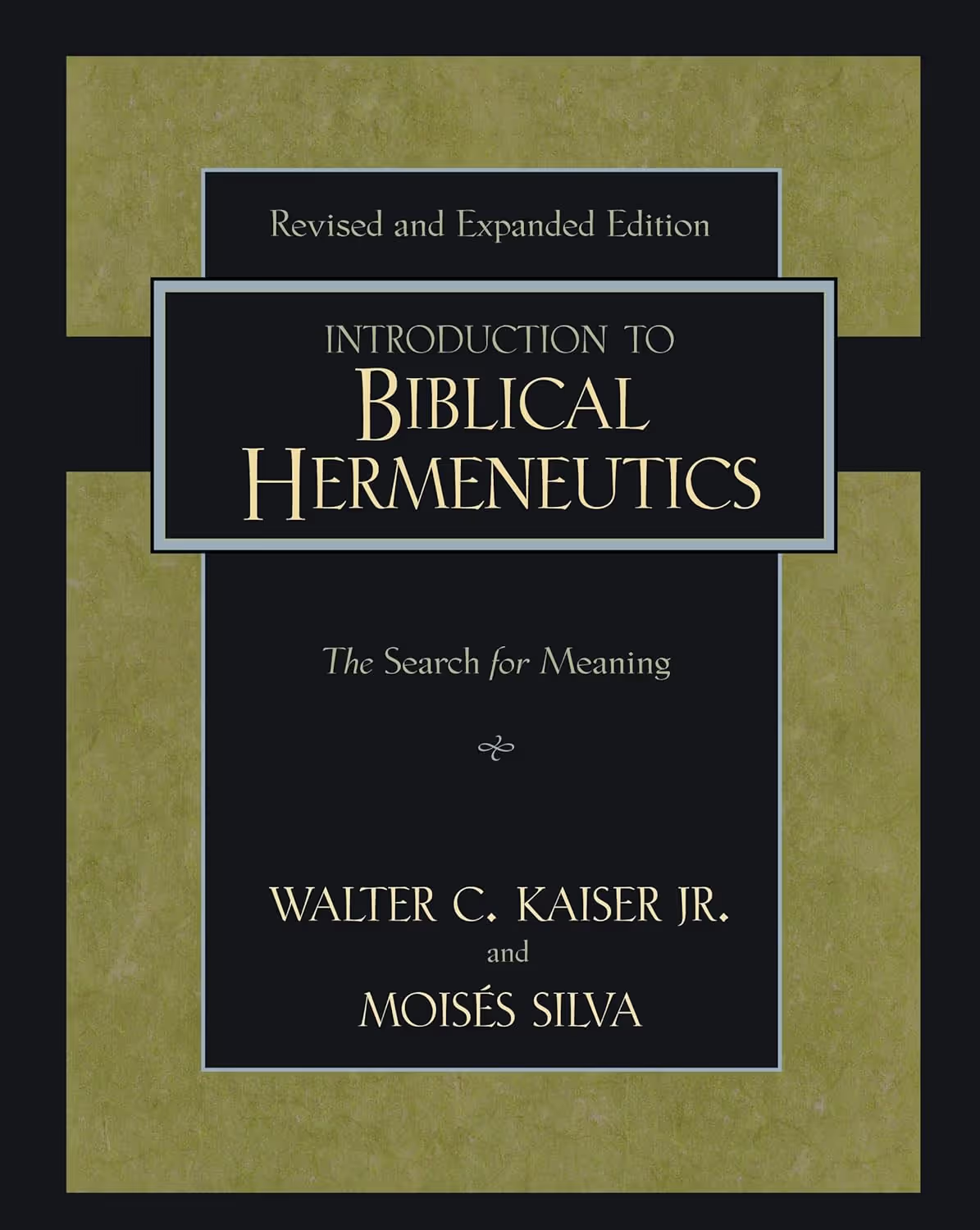
An Introduction to Biblical Hermeneutics; the Search for Meaning
Walter C Kaiser Junior and Moises Silva

A Handbook of New Testament Exegesis
Craig L Blomberg